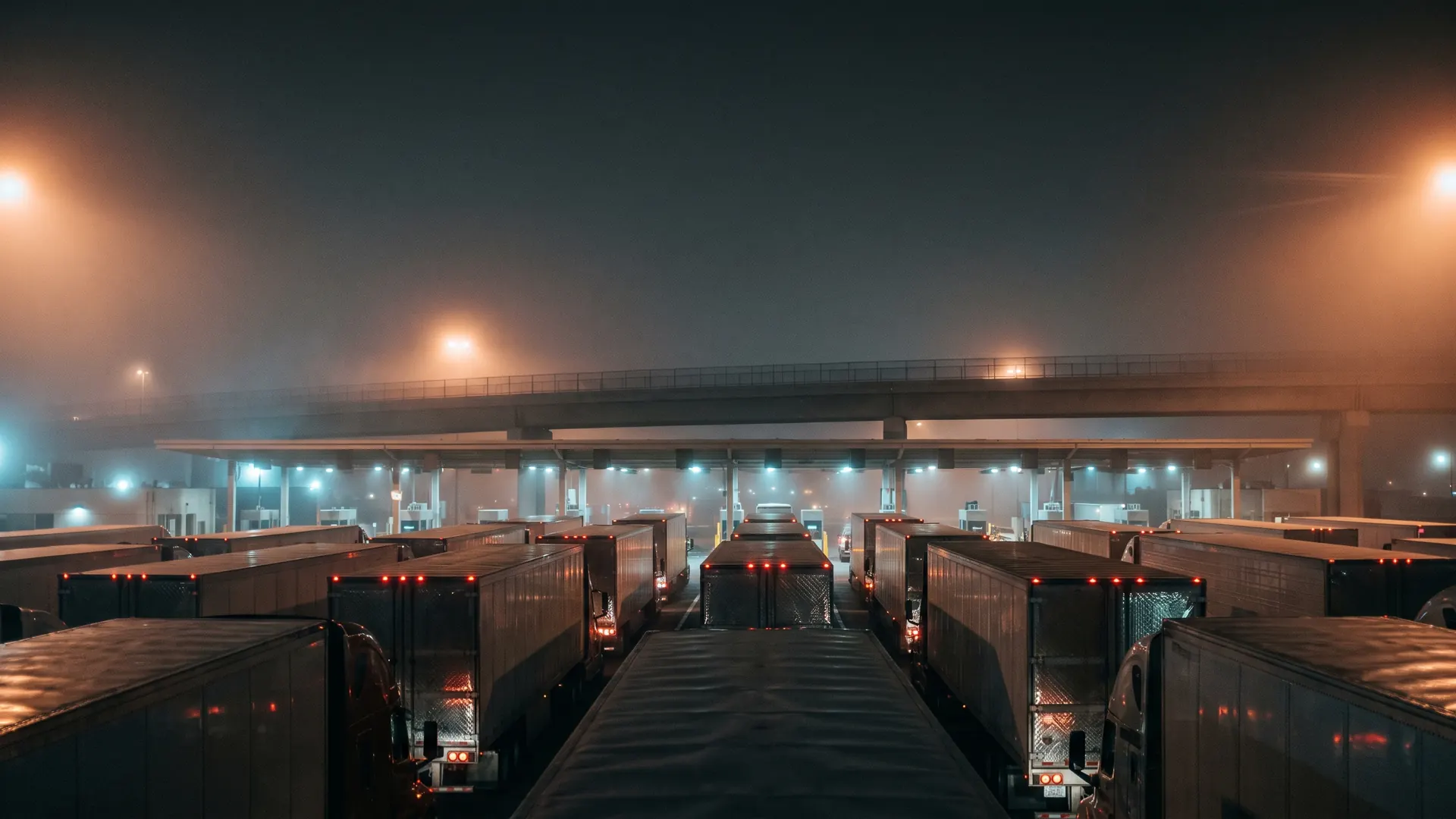
Ground Transportation · US–Mexico
US–Mexico cross-border trucking with paperwork ready before the line
What cuts border wait time isn't the truck or the driver — it's having the customs documents for both countries resolved before the unit arrives.
Short answer
What makes a crossing more than driving
Every commercial crossing needs an export clearance on one side and an import clearance on the other, each with its own documents — not the same process twice, but two customs processes that have to match. On top of that, most carriers aren't authorized to operate commercially across the border, which adds a coordination step that a domestic move doesn't have.
Direct crossing vs. transfer
In a transfer, the trailer changes tractor at the border: the Mexican tractor hands the trailer to a US tractor (or the other way around) without unloading or handling the cargo. It solves the authority problem at the cost of one more handoff, which must be scheduled in advance — an unplanned transfer means the trailer waits at the line until the unit that picks it up shows up.
How we work
We book the truck — full truckload (FTL) or consolidated (LTL), dry or refrigerated — and plan the border handoff. Kold Gold does not hold its own customs broker license: the Mexican clearance is filed by our partner licensed customs broker, and we align it with your US customs broker's filing from before the unit leaves origin. Every unit is tracked by GPS 24/7. Cargo insurance is available on request.
Crossings where we operate
Nuevo Laredo – Laredo, TX
Nogales
Tijuana – Otay Mesa
Ciudad Juárez – El Paso, TX
Reynosa
Mexicali
Each crossing has its own infrastructure, traffic and operating details. Nuevo Laredo–Laredo is the busiest commercial crossing between Mexico and the United States; for the Mexican clearance there, see Laredo customs brokerage.
Documents for both sides
- Commercial invoice and packing list that match the trailer's contents
- Mexican customs entry (pedimento), filed by our partner licensed customs broker
- US-side customs filing, by the party responsible for it (normally your US customs broker)
- USMCA certification of origin, when preferential duty is claimed
- CFDI with Carta Porte complement for the leg inside Mexico
- Permits, NOM compliance or sanitary requirements tied to the tariff classification
Approximate timing
A truck whose paperwork is complete and pre-validated before it reaches the line crosses in the time of the standard review. A truck that arrives with missing or inconsistent documents is held until they are fixed, adding waiting charges and sometimes a missed appointment window. There is no fixed time valid for every crossing or every season: confirm the current wait for your crossing and date before committing a delivery.
Frequently asked questions
What clients ask us most
Quote your cross-border move
Share origin, destination, crossing preference, equipment (dry or refrigerated), weight or pallet count and how often you ship. We come back with the route, the border plan and the documents each side needs.
WhatsApp or phone: +1 (619) 359-6567·+52 55 8897 4255·direccion@kold.gold
Informational only — not legal, tax or customs advice. Legal basis: Mexico's Customs Law (Ley Aduanera) and current General Foreign Trade Rules (RGCE), USMCA (certification of origin) and SAT rules on the CFDI with Carta Porte complement. US-side requirements are set by US Customs and Border Protection.·Last reviewed: October 15, 2026